
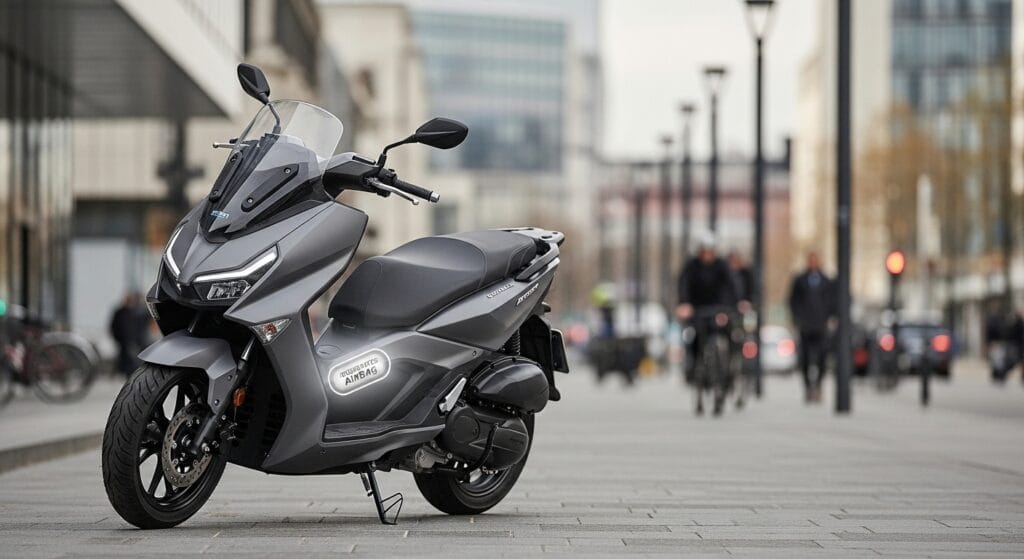
Built-in motorcycle airbags are becoming one of the most interesting safety topics in the motorcycle world in 2026. For years, riders have accepted that motorcycles offer less physical protection than cars. Helmets, jackets, gloves, and boots help. Rider training helps too. Modern electronics like ABS and traction control have also improved safety. Even so, many riders still viewed airbags as something more associated with cars than two-wheelers.
That idea is now starting to change. Yamaha and Autoliv have introduced an airbag system for the 2026 Tricity 300 commuter scooter. The system is integrated into the front panel and designed to help absorb the rider’s kinetic energy in a frontal collision. That makes it one of the biggest safety stories in motorcycling right now. :contentReference[oaicite:1]{index=1}
The timing matters. Riders are already seeing more safety technology on bikes, including radar-based rider aids, smarter braking systems, and wearable airbag gear. Now the idea of built-in motorcycle airbags is moving closer to mainstream discussion. The big question is no longer whether airbags belong in the motorcycle world. The better question is whether 2026 could mark the point when rider airbags begin to move from niche innovation to a practical everyday feature.
Why Built-In Airbags Are Trending in 2026
Motorcycle safety has been evolving for years. What used to feel high-end now feels normal. ABS is common. Many riders expect traction control on larger bikes. Some machines now offer radar-assisted cruise control, blind-spot warnings, lean-sensitive electronics, and advanced dashboards. Safety technology has become a bigger part of the buying conversation.
That is why built-in motorcycle airbags are getting attention now. They feel like the next major step. Instead of only helping the rider avoid a crash, an airbag system aims to reduce injury when a frontal impact happens. That shifts the discussion from crash prevention alone to rider impact protection as well.
A Scooter Makes More Sense Than Many Riders First Think
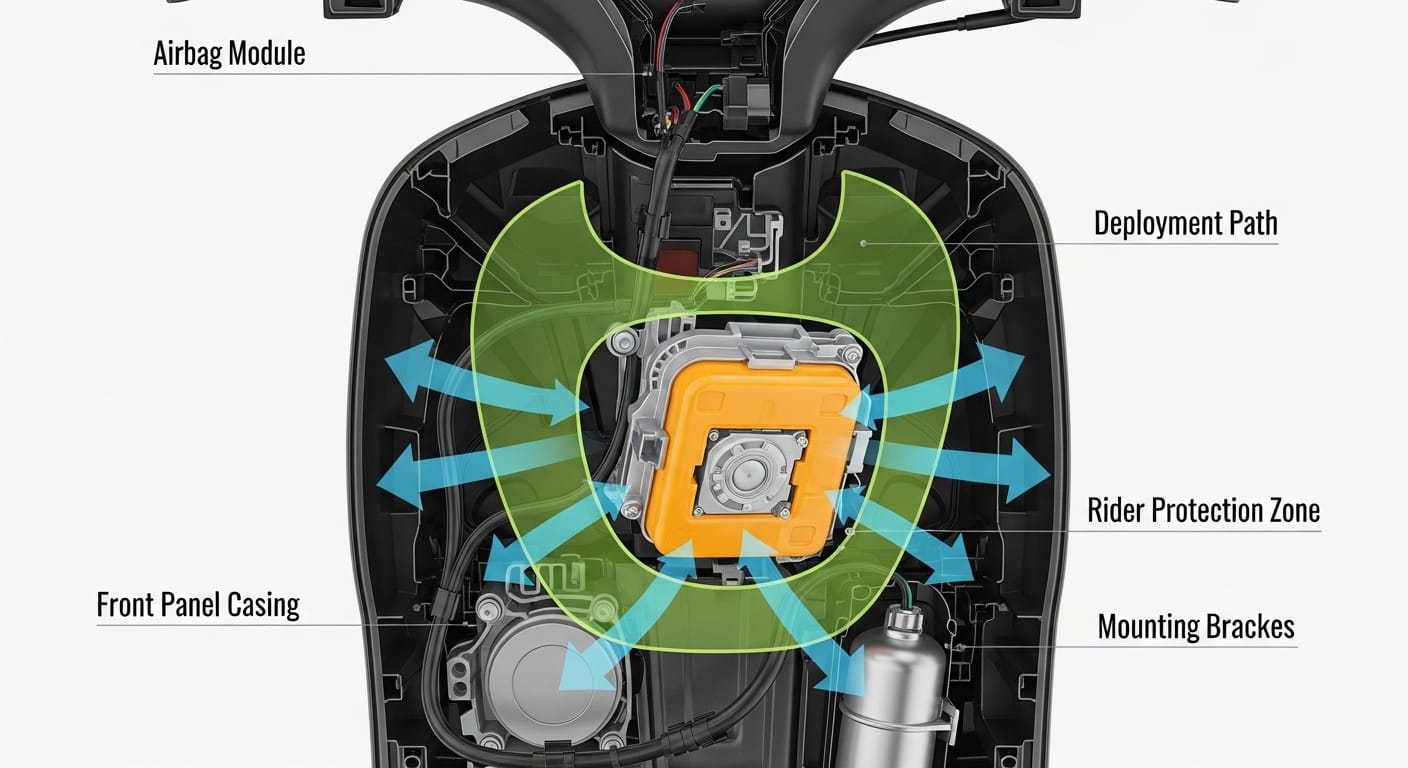
Some riders may look at the 2026 Tricity 300 and dismiss the story because it is a scooter, not a superbike or adventure tourer. That would be a mistake. A commuter scooter may actually be the perfect place for this technology to grow first.
Commuter riders spend a lot of time in traffic. They deal with intersections, distracted drivers, low-speed chaos, delivery vehicles, and sudden stops. Those are exactly the situations where frontal crash protection can matter. A scooter also gives engineers packaging space in the front section, which can make airbag integration more practical.
That makes the Tricity 300 important beyond its own market segment. It may act as a real-world test case for how riders respond to factory-installed airbags. If the system proves useful and reliable, other commuter scooters, touring machines, and even larger motorcycles may follow.
Commuting Is Where Safety Tech Often Becomes Most Useful
Many riders imagine cutting-edge technology arriving first on expensive halo bikes. Sometimes that happens. But commuter models can influence the market in a different way. They put new ideas in front of everyday riders.
A commuter scooter with an integrated airbag sends a clear message. Safety technology is not only for elite machines. It can also target daily transport. That matters because everyday commuting exposes riders to constant traffic risk. A visible, easy-to-understand feature like an airbag may also reassure newer riders and families.
Cycle World notes that the Tricity 300 airbag was developed with Autoliv, a major name in automotive safety systems. That partnership adds credibility and shows that motorcycle safety development is starting to borrow more directly from the car industry. :contentReference[oaicite:2]{index=2}
Built-In Systems Offer a Different Kind of Protection
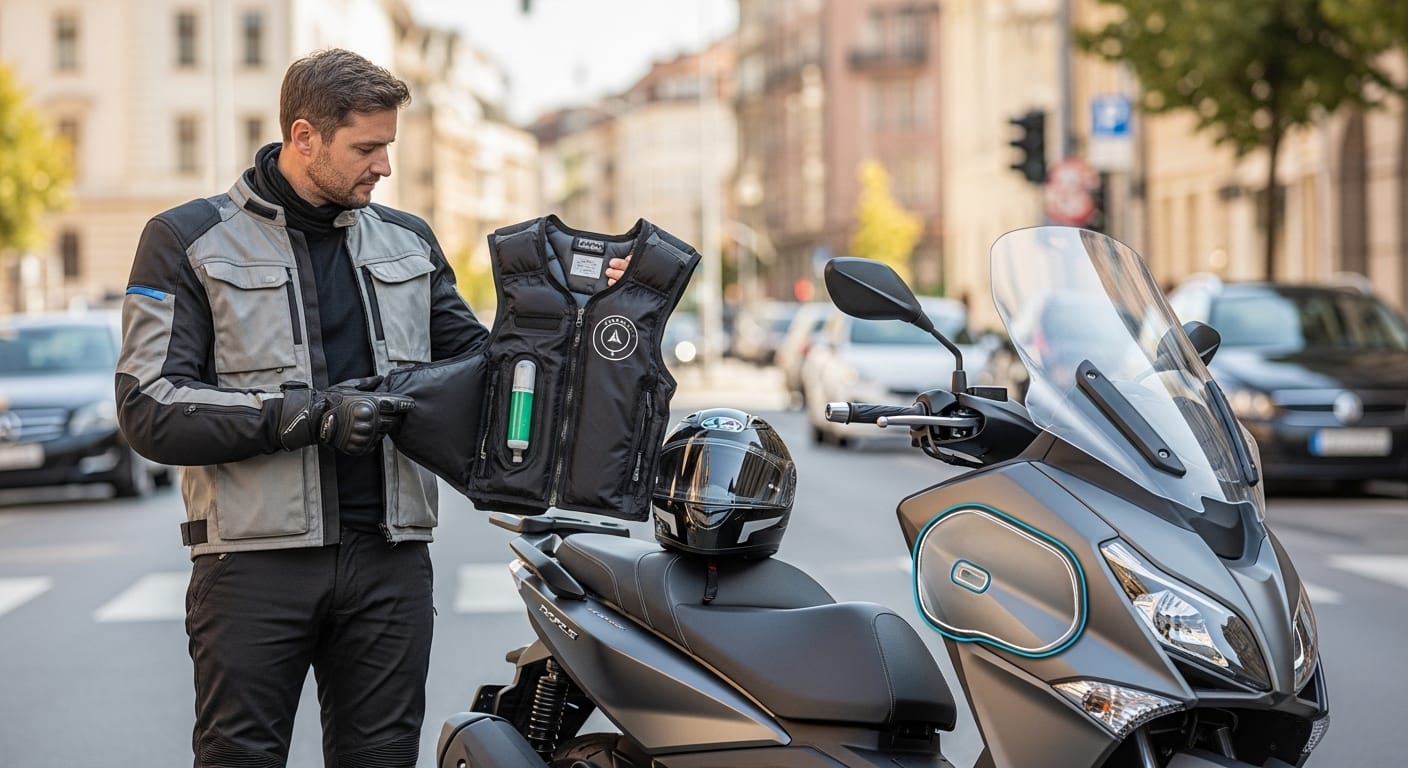
Riders already know about wearable airbag vests. Those products have grown in popularity because they can reduce injury risk in certain crashes. They are a real step forward in rider safety. Still, they depend on the rider wearing them consistently, choosing the correct fit, keeping them charged if electronic, and accepting the extra cost and bulk.
Built-in motorcycle airbags offer a different approach. The protection becomes part of the vehicle. The rider does not need to remember another piece of gear before every short trip. That matters especially for commuters, new riders, or casual users who may not wear high-end protective gear on every ride.
That does not mean built-in systems replace gear. Riders still need a helmet and proper protection. The better way to see it is as another layer. A built-in airbag may work together with helmets, armored clothing, ABS, traction control, and rider awareness.
Built-In Airbags and Wearable Airbags Are Not the Same Thing
It is important not to mix the two ideas together. A built-in airbag is attached to the bike or scooter. It deploys based on crash conditions and aims to protect the rider during a specific type of impact, especially frontal collisions. A wearable vest travels with the rider and may help in a broader range of crash scenarios depending on the product.
That means each solution has strengths. A built-in system can feel seamless and automatic. A wearable system can move from bike to bike. Riders may eventually choose one, the other, or both. The wider point is that airbag technology is no longer a fringe topic. It is becoming part of the mainstream motorcycle safety conversation.
What Riders Should Watch Before Calling Built-In Airbags the Future
The airbag story is exciting, but smart riders should stay practical. A new technology headline does not automatically mean the feature is ready to transform the whole market overnight. Motorcycles vary a lot in design, price, size, and intended use. What works on a commuter scooter may not transfer directly to every type of bike.
Riders should also remember that safety technology works best when it fits real riding habits. A feature can sound impressive in a press release but still face limits in the real world. That is why buyers and readers should look beyond the headline and ask better questions.
Riders Should Look at Cost, Real Use, and Wider Adoption
Price will matter. New safety technology usually appears on premium products or in specialized market segments first. If built-in motorcycle airbags add too much cost, some riders may ignore them for several years. Broader adoption often depends on price becoming more reasonable over time.
Real-world performance also matters. Riders will want to know how the system behaves in actual traffic. They will want to understand what kinds of crashes trigger deployment, how repairs work after activation, and whether the airbag affects storage space, servicing, or overall weight.
Adoption across the market is another big factor. One scooter does not create a full industry shift by itself. The bigger trend will depend on whether other brands follow. If several brands begin testing or launching similar systems, the technology may gain momentum much faster.
Questions Smart Riders Should Ask Before They Buy In
Riders should ask simple and practical questions. How much extra does the airbag system cost? What kind of crash does it protect against? How is it serviced after deployment? Does it change insurance or maintenance costs? Can it help without making the motorcycle bulky or complicated?
These questions matter because riders do not buy motorcycles based on one feature alone. They care about comfort, handling, practicality, styling, and value. Safety can influence the decision, but only when the full package still makes sense.
This is also a great place to connect readers with your existing internal content. The site’s Motorcycle Technology section helps frame where this innovation fits in the wider industry. The Riding Safety section supports the broader conversation about preventing injuries, while Motorcycle Gear gives helpful context for readers comparing factory airbag systems with wearable protection.
This Trend Fits a Bigger Safety Shift in Motorcycling
The biggest reason this story matters is that it does not stand alone. It fits a larger pattern. Motorcycles are getting smarter. Riders are becoming more open to safety technology. Brands are trying to make advanced features feel normal rather than optional luxuries.
That is why built-in motorcycle airbags matter even if they remain rare in the short term. They show where the industry may be heading. Ten years ago, many riders treated advanced rider aids as unnecessary electronics. Today, many of those same features are common and widely accepted. Airbag systems may follow a similar path if riders see real value in them.
For Moto News Blog readers, this makes 2026 a fascinating moment. The motorcycle world is not only talking about more power, bigger screens, or newer styling. It is also talking more seriously about how to protect riders when things go wrong. That is a healthy shift for the industry.
Readers who want more context can also explore your Rider Tips section for practical guidance that supports safer everyday riding. Safety technology works best when it supports good habits, smart gear choices, and better awareness on the road.
For external authority, readers can review the official announcement from Autoliv and the independent coverage from Cycle World. Those sources show why this story has become one of the most talked-about motorcycle safety developments of 2026. :contentReference[oaicite:3]{index=3}