
Readers researching motorcycle tire pressure monitoring need practical distinctions, reliable sources and a clear next step. The answer often depends on the circumstances, what can be verified and which professional or official instructions apply. This motorcycle technology guide focuses on the decision points people can actually investigate, rather than promising a universal result.
Motorcycle technology and travel routines change, but the essentials remain compatibility, realistic limitations and a careful pre-ride check. Rather than treating every new product or plan as an automatic upgrade, consider how it performs in the conditions where the motorcycle will actually be used.
How motorcycle TPMS works on real roads
Motorcycle tire pressure monitoring in 2026 attracts riders who want more warning before a tire problem becomes dangerous. TPMS devices can show changing pressure and sometimes temperature, but they do not replace a cold-pressure inspection or tell the rider everything about tread and sidewall condition. The best system fits the motorcycle and helps decision-making without demanding attention while moving. A motorcycle-specific decision changes with model, load, weather, road surface, and riding experience. Advice that works on one bike may be wrong for another. Start with the owner’s manual and condition of the machine, and separate manufacturer specifications from product marketing. For further context, review Moto News Blog articles.
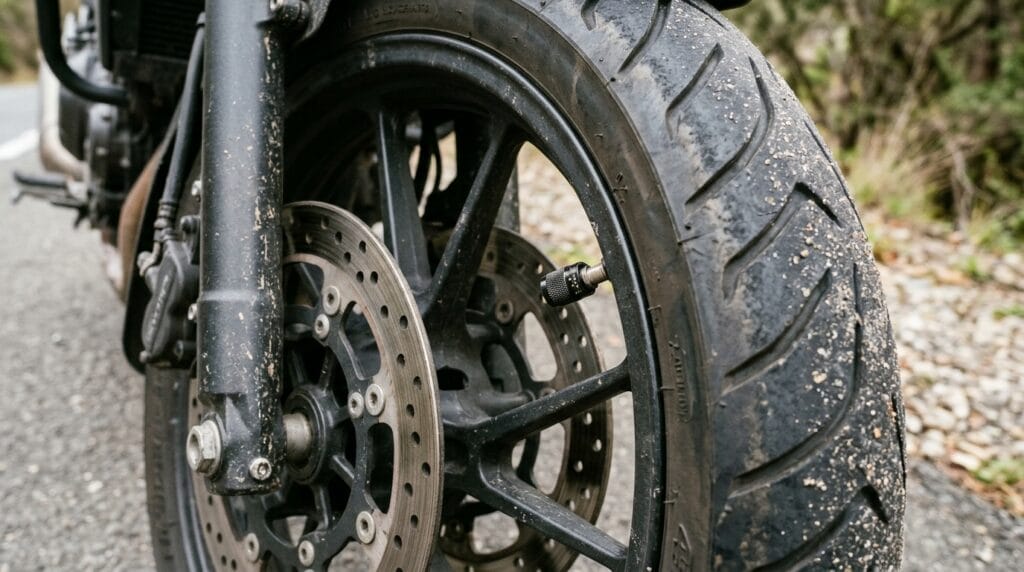
Direct systems use sensors that measure pressure at or inside the wheel. Add-on valve-cap sensors can be convenient but may introduce balance, security and valve compatibility questions. Internal sensors require additional fitting work and attention to tire service procedures. Indirect estimates, when supported by a vehicle, work differently and cannot be assumed to behave like direct pressure readings. Visible convenience is not the same as real-world safety. A device or accessory may help awareness while introducing another distraction, maintenance requirement, or failure mode. Consider what happens when its battery fails, signal drops, or information arrives too late.
Direct sensors and indirect estimates
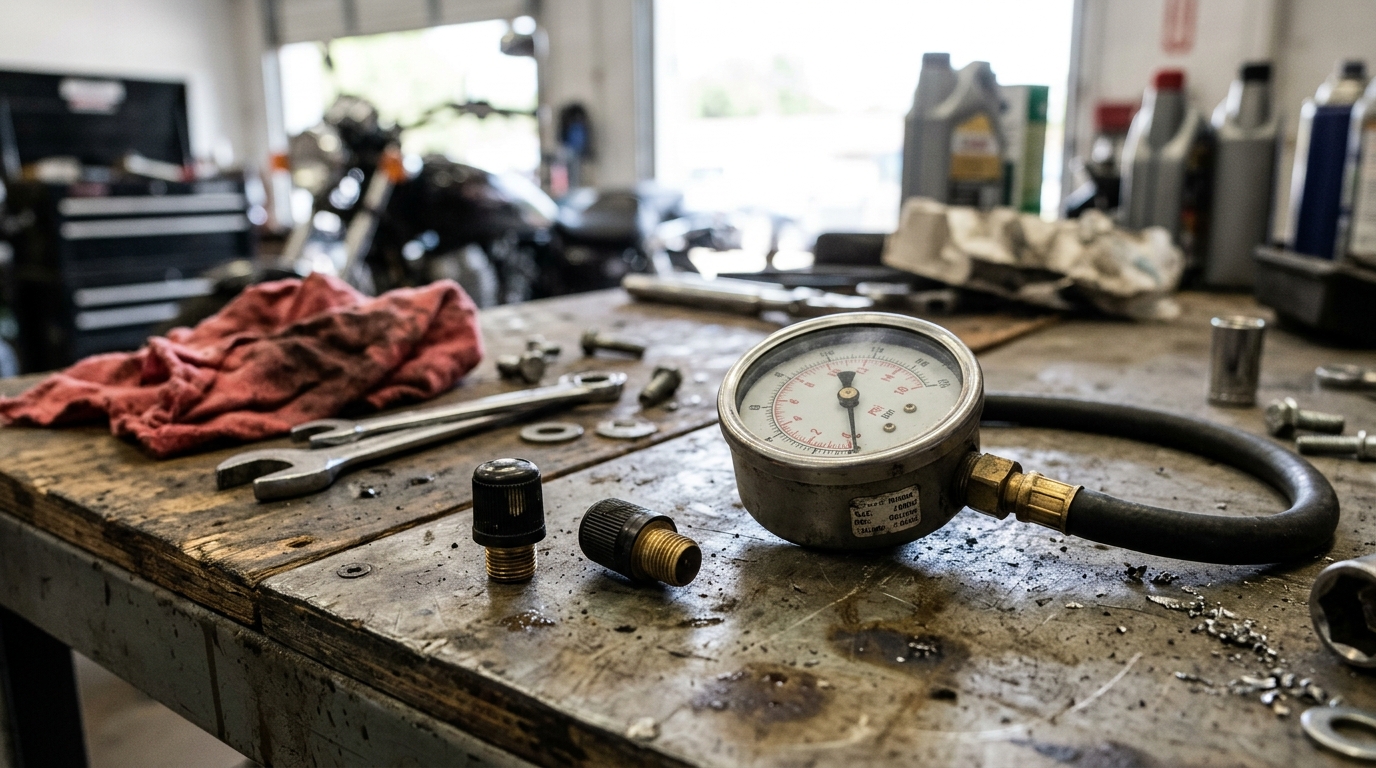
Tire pressure normally changes as a tire warms in use. That is why manufacturer recommendations commonly specify checking cold inflation pressure, not forcing hot readings down to the cold target. Riders who see a higher number after motorway riding should not automatically vent air. Compare the manual’s cold specification with a reliable gauge before deciding a warning is faulty. A pre-ride routine should be short enough to repeat reliably and thorough enough to catch obvious problems. Check the components relevant to this topic, look for wear or leaks, and do not ignore a change in handling simply because a dashboard display looks normal.
Valve-stem sensors need compatibility checks
A TPMS display depends on sensor operation, battery condition, communication quality and how frequently it updates. A slow leak may be more visible than a sudden catastrophic failure; no device promises enough reaction time to make every tire event safe. A rider still needs to recognize vibration, unusual steering, instability and visible damage as reasons to stop. Route planning is part of mechanical planning. Temperature shifts, road debris, luggage, long highway stretches, and unexpected delays all change the demands on the rider. Leave enough time to stop and reassess rather than compensating for a problem by riding faster.
Heat and altitude change displayed values
The installation matters as much as the display. Check whether a valve sensor is recommended for the bike’s wheel and valve type, and whether the sensor weight affects balance. Confirm the manufacturer’s torque and service instructions. Tire removal, internal sensor fitting and balancing should be handled by people with the right equipment rather than improvised at home. Comparing products requires more than a headline specification. Check fitment, warranty, replacement parts, installation requirements, and whether the feature is supported in your region. Pay attention to what an advertised number measures and what it does not.
Motorcycles are not governed by the same broad US passenger-car TPMS mandate, so avoid advertising an aftermarket gadget as federally required equipment for every bike. Check the actual model and market. The relevant safety decision is whether it is reliable, compatible and useful for that rider.
Cold pressure still matters
When comparing systems, look for clear units, readable alerts, waterproofing, battery replacement availability and pairing behavior. A phone-only display may be less practical than a dedicated screen if it invites glances or handling. Also check whether the product stores personal ride data and how firmware updates are provided. If a warning appears while riding, prioritize a safe location before troubleshooting. Do not stare at a screen, adjust settings in traffic, or assume a sensor reading captures every hazardous condition. Manual inspection and trained service remain important.
A temperature display is best understood as contextual information rather than a precise measure of tread grip. Sensor location, heat transfer and riding conditions can influence the reading. Tire compounds and road temperatures add further uncertainty, so do not derive a guaranteed cornering limit from one number.
A realistic 2026 buying and maintenance checklist
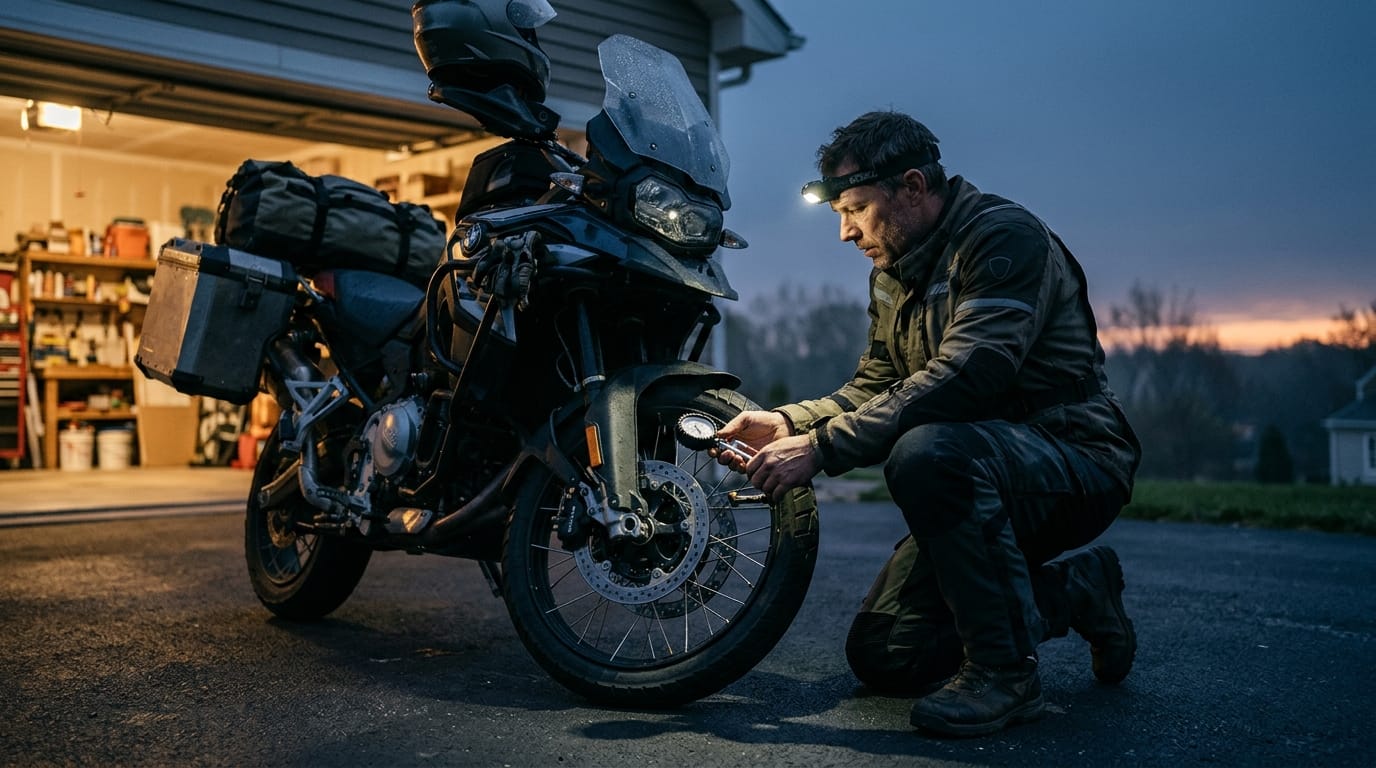
A pre-ride inspection still begins with tread, sidewalls, visible foreign objects and the cold pressure specified for the actual load. Passenger and luggage conditions can affect the recommended setup. Do not assume a generic pressure copied from another motorcycle is correct. Check the owner’s manual and tire maker guidance for that fitment. For longer rides, pack a compact list of contacts, insurance details, charging equipment where needed, and a way to navigate without continuous mobile data. Share a realistic itinerary with someone you trust and allow flexibility for weather or ferry and border delays.
Know when alerts can mislead
Practice responding to a warning while parked. Know the display’s symbols, the normal warm-up pattern, and how to verify a suspect reading. If pressure drops unexpectedly, stop somewhere safe and investigate rather than trying to complete a fast ride. A portable gauge and roadside support plan remain valuable companions to electronics. A sensible upgrade should simplify the ride, not make it depend on constant fiddling. Practice with new equipment off public roads and verify it after installation. If the manufacturer’s instructions require a specialist, professional work is usually the safer choice.
Compare battery life, fitment and weather sealing
Consider a rider who sees a small pressure decline over several stops. The sensor may provide a useful early clue, but the cause could be a puncture, valve leak, temperature change or faulty unit. A physical inspection and repeat measurement help distinguish them. TPMS is a monitoring aid, not a diagnosis of tire integrity. The strongest riding routine combines basic maintenance, appropriate gear, conservative decisions, and realistic route planning. Technology can support judgment, but it cannot replace attention to the road and the bike’s physical condition.
Never use an alert as permission to ride on a damaged tire
If choosing a wireless display, test its readability with gloves and direct sun while parked. Bright animated warnings can become distractions. A clear alert that requires a safe stop is more useful than a dashboard packed with data a rider is tempted to study in traffic.
Some riders prefer a simple pressure gauge and disciplined checks over installing extra electronics. That can be a rational choice for short rides on a well-maintained bike. Other riders value an early warning on long touring days. The right answer depends on reliable monitoring, proper fit and the rider’s willingness to maintain the system.
Pre-departure check: Review compatibility or booking details, inspect equipment, confirm spare or emergency arrangements, and consider the effects of weather and load. If something seems uncertain, resolve it while parked. An extra few minutes of preparation is preferable to troubleshooting in traffic.
For authoritative context, consult NHTSA tire safety and TPMS overview. Its scope and limitations should be considered alongside the specific facts; the link is not a substitute for professional or local instructions.
Choose a plan that remains sensible when conditions change. Check the specific motorcycle, equipment, booking or route, and make adjustments while stopped rather than in motion. Reliable basics and honest limits provide more value than the most impressive specification on a product page.