
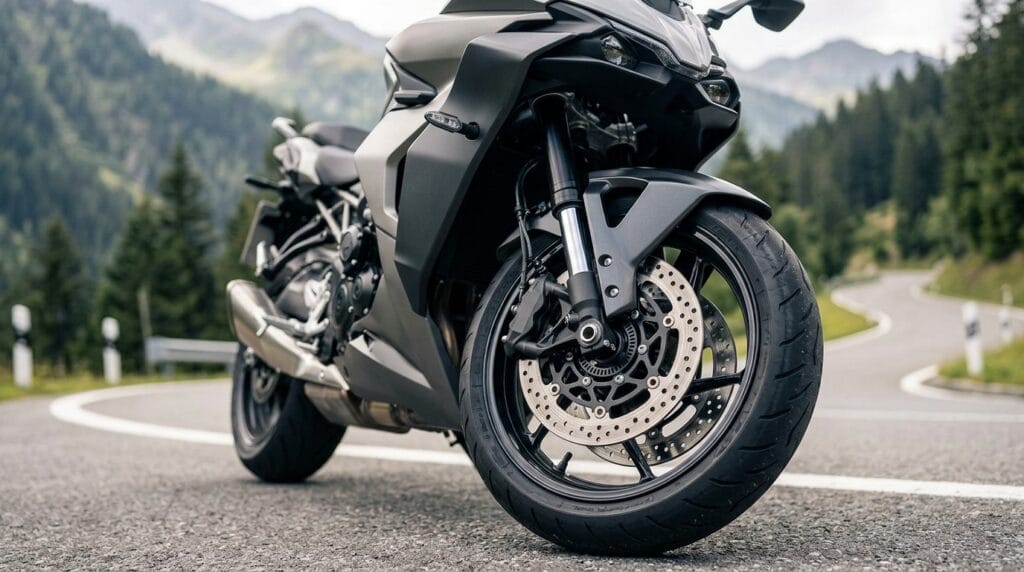
Motorcycle ABS in 2026 deserves more attention than another flashy dashboard or horsepower upgrade. Anti-lock braking systems have existed for years, but updated safety research continues to demonstrate why this technology matters for everyday riders. Whether you commute through traffic, explore mountain roads, or enjoy weekend touring, the ability to maintain control during emergency braking can make a meaningful difference.
In August 2026, the Insurance Institute for Highway Safety updated its motorcycle safety research. The organization reported that 71% of motorcycle models available in 2025 came with standard ABS, while another 11% offered it as an option. This suggests that anti-lock braking technology has become increasingly accessible across the motorcycle market.
More importantly, IIHS research found that the rate of fatal crashes was 22% lower for motorcycles equipped with optional ABS than for comparable models without the system. This finding does not mean ABS prevents every accident. However, it provides strong evidence that braking technology deserves serious consideration when choosing a motorcycle.
For riders researching motorcycle safety technology in 2026, understanding how ABS works is more useful than simply recognizing the abbreviation on a specification sheet. This guide explores the technology, its real-world benefits, common misconceptions, and what to check before purchasing or maintaining an ABS-equipped bike.
What Updated Motorcycle ABS Research Reveals About Rider Safety
Motorcycles present different braking challenges from passenger cars. Most motorcycles have separate controls for their front and rear brakes, and the balance between those brakes changes during deceleration. As a rider brakes harder, weight transfers toward the front wheel, changing available traction at each tire.
On a motorcycle without ABS, excessive braking force can cause a wheel to lock. A locked front wheel may lead to a sudden loss of steering control and a fall. Rear-wheel lock can also cause instability, particularly when the motorcycle is turning or traveling over an uneven surface.
ABS helps manage these situations by monitoring wheel speed and adjusting hydraulic brake pressure when the system detects an impending lockup. Its goal is to preserve wheel rotation and controllability during hard braking.
How motorcycle ABS works during emergency braking
An ABS-equipped motorcycle typically uses wheel-speed sensors, electronic control hardware, and a hydraulic modulator. The sensors monitor wheel rotation and transmit information to the control unit.
When the system detects conditions suggesting a wheel is about to lock, it can reduce and restore brake pressure rapidly. These adjustments happen much faster than a rider could manually repeat the same process.
During ordinary braking, ABS may remain inactive. Riders generally notice its operation during hard stops or when a tire approaches its available traction limit.
Some modern motorcycles also offer cornering ABS, which uses additional motion sensors to help manage braking while the bike is leaned over. However, conventional ABS and cornering ABS are not identical technologies.
Why preventing wheel lock matters for motorcycle stability
When a wheel locks, its ability to provide normal steering or directional stability can decrease dramatically. A front-wheel skid is especially dangerous because it can cause a rider to lose control almost immediately.
ABS reduces the likelihood of a braking-induced wheel lock, helping riders maintain greater control in many emergency situations.
This does not mean the motorcycle can ignore the laws of physics. Excessive speed, poor traction, and extreme lean angles can still produce a crash.
Riders should continue practicing progressive braking and maintaining adequate following distance rather than treating ABS as permission to ride aggressively.
What the 22% lower fatal crash rate really means
The IIHS finding of a 22% lower fatal crash rate comes from comparisons between motorcycles equipped with optional ABS and otherwise comparable versions without it.
That is an important distinction. The figure does not mean an individual rider has exactly a 22% lower chance of dying in every possible accident. It describes an observed difference in fatal crash rates across the studied motorcycles.
IIHS also reports that collision insurance claims are filed less frequently for ABS-equipped motorcycles. These findings support ABS as a meaningful safety feature, although rider behavior, protective equipment, road conditions, and motorcycle type remain important.
For the underlying research and updated availability statistics, visit the Insurance Institute for Highway Safety motorcycle research page.
Why ABS is especially valuable in unpredictable traffic
Many motorcycle emergencies develop with very little warning. A car may turn across a rider’s path, traffic may stop unexpectedly, or debris may appear around a blind corner.
During these moments, riders must make decisions quickly. Effective braking requires applying enough force to slow the motorcycle without exceeding the tires’ available grip.
ABS can provide additional protection when a rider applies excessive pressure in an emergency. It is especially relevant for newer riders who have not yet developed consistent threshold-braking skills.
Experienced motorcyclists can benefit as well. Even a well-trained rider may encounter unexpected traction changes or react imperfectly under stress.
Wet roads, panic braking, and limited traction
Rain can reduce available grip and make braking more difficult. Painted road markings, metal covers, loose gravel, and accumulated oil may create additional hazards.
ABS helps manage wheel lock under many slippery conditions, but stopping distances still depend on traction, tires, speed, and rider inputs. Certain loose surfaces and specialized off-road situations may require different techniques or riding modes.
Our guide to riding a motorcycle safely in the rain explains how smoother controls, suitable tires, and increased following distance contribute to safer wet-weather riding.
ABS should complement those habits, not replace them.
Should Riders Prioritize ABS When Buying a Motorcycle in 2026?
Motorcycle buyers often compare engine size, seat height, weight, fuel economy, comfort, and technology. ABS deserves a place near the top of that list because it directly affects braking control.
For someone choosing between two otherwise similar motorcycles, an ABS-equipped version may offer a meaningful safety advantage. This is particularly relevant for commuters, new riders, and motorcyclists who regularly travel in changing weather.
The technology is also worth considering when shopping for a used motorcycle. Older models may have been sold with ABS as an optional package, making it important to verify the exact configuration.
Buyers should not assume that every motorcycle of a particular model year includes ABS simply because some versions were equipped with it.
ABS versus advanced motorcycle rider-assistance technology
ABS is one part of a broader motorcycle safety system. Other technologies may include traction control, selectable riding modes, electronic stability assistance, radar-based warnings, and adaptive cruise control.
These systems address different situations. Traction control generally focuses on limiting excessive driven-wheel slip during acceleration, while ABS primarily manages wheel lock during braking.
Cornering ABS adds additional information about motorcycle movement, allowing compatible systems to adapt braking intervention while the motorcycle is leaned over.
Radar assistance may help detect surrounding traffic, but the available features vary significantly between manufacturers and models.
Our existing article on motorcycle safety technology in 2026 examines how airbags, radar systems, and other electronic aids are changing modern motorcycles.
While advanced electronics can provide useful assistance, a rider should understand what each system actually does and where its limitations begin.
What to check before buying a used ABS motorcycle
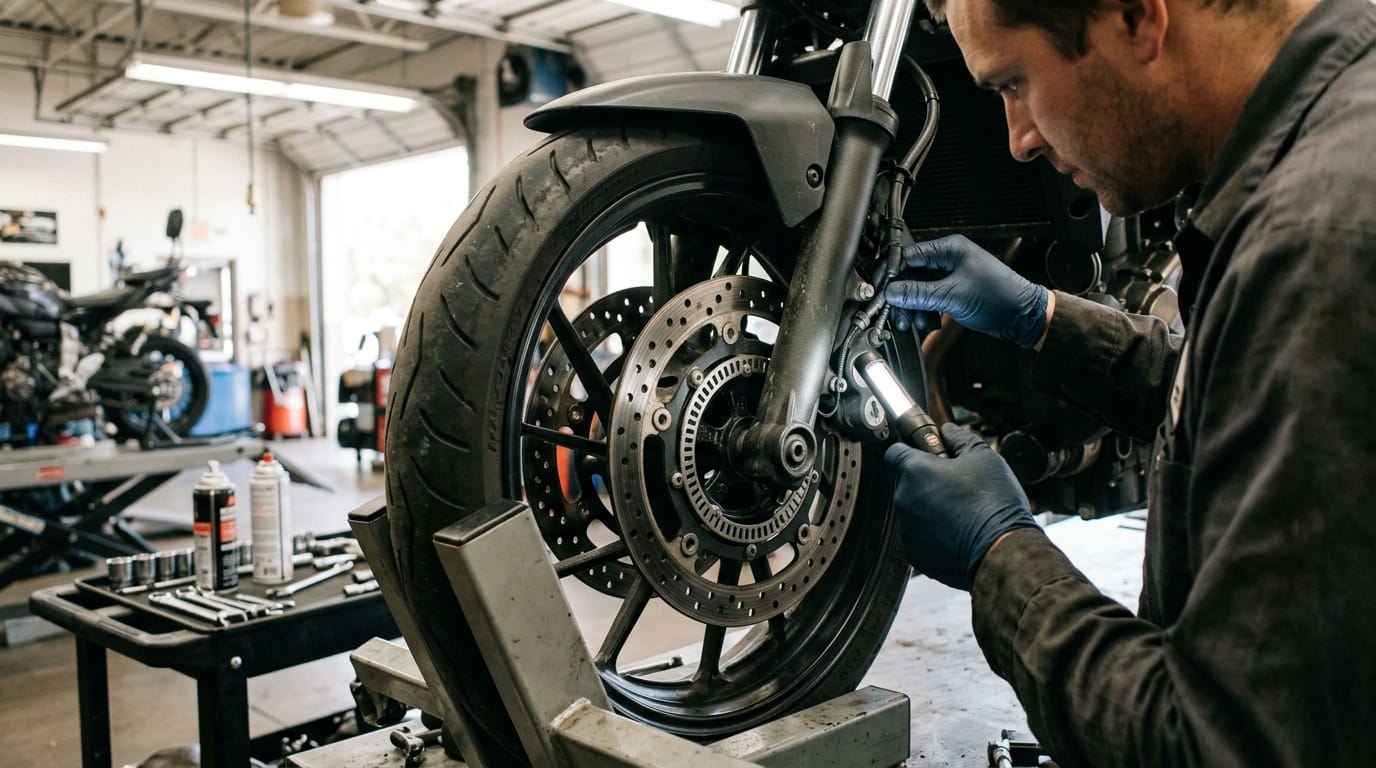
Start by confirming that the specific motorcycle has factory-installed ABS. Review the manufacturer’s specifications, vehicle identification information, and equipment documentation where available.
Inspect the dashboard warning light during startup. Many motorcycles illuminate the ABS indicator during their initial self-check, although the exact sequence varies by manufacturer.
A warning light that remains illuminated under conditions where it should have cleared may indicate a problem requiring diagnosis.
Also examine maintenance records. Brake fluid replacement intervals, sensor condition, wheel modifications, and previous repairs can affect proper operation.
Do not assume that seeing an ABS tone ring near a brake disc proves the complete system is functioning correctly.
A qualified motorcycle technician should evaluate warning lights, suspected faults, and braking irregularities before purchase.
Proper tires remain essential. ABS cannot compensate for severely worn tires, incorrect inflation, or unsuitable rubber for the riding environment.
Motorcyclists should also avoid unauthorized changes to ABS components, wiring, wheel sensors, or electronic controls. Modifications may introduce faults or interfere with the manufacturer’s intended operation.
ABS maintenance should follow the motorcycle’s service manual. Some procedures require specialized diagnostic equipment, particularly when servicing hydraulic components or bleeding systems with electronically controlled modulators.
For everyday riders, a simple habit is to confirm that the warning indicators behave normally and investigate any unusual braking response.
Helmet protection is another important priority. ABS may reduce certain crash risks, but it cannot eliminate the consequences of an impact.
Our article on motorcycle helmet standards in 2026 compares DOT, ECE 22.06, and FIM certification, helping riders understand how protective equipment should be selected.
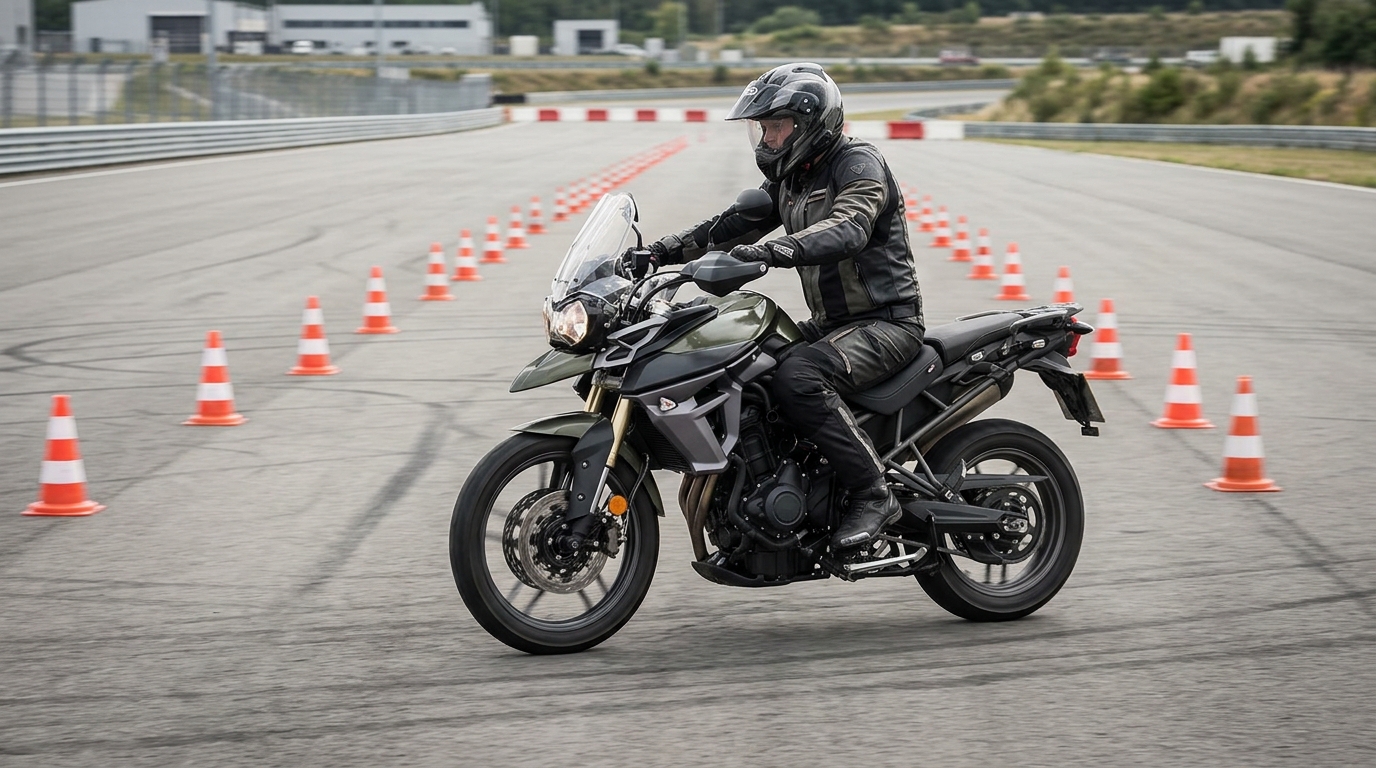
Riders should also remember that technology does not replace training. Practicing controlled braking in a suitable environment helps build confidence and familiarity with the motorcycle’s response.
Start with moderate speeds and gradually develop braking skills under appropriate instruction. Riders should follow their owner’s manual and avoid deliberately activating ABS in ordinary traffic.
New motorcyclists may benefit from an accredited rider training course where instructors can demonstrate proper braking techniques and emergency responses.
For experienced riders, periodic practice can help maintain skills that are rarely used during routine commuting.
As motorcycle technology continues developing, manufacturers are likely to integrate braking, traction, and motion-control systems more closely. However, buyers should judge products by their actual capabilities rather than marketing descriptions.
Motorcycle ABS in 2026 remains one of the most practical safety improvements available to riders. The latest IIHS research reinforces its importance while showing how widely the technology has entered the market.
Whether purchasing a new motorcycle, inspecting a used bike, or reviewing maintenance priorities, riders should treat properly functioning ABS as a valuable safety consideration.
Ultimately, safer motorcycling combines reliable equipment, protective gear, realistic speed choices, good road awareness, and practiced riding skills. ABS supports those fundamentals, but the rider remains responsible for operating the motorcycle safely.