
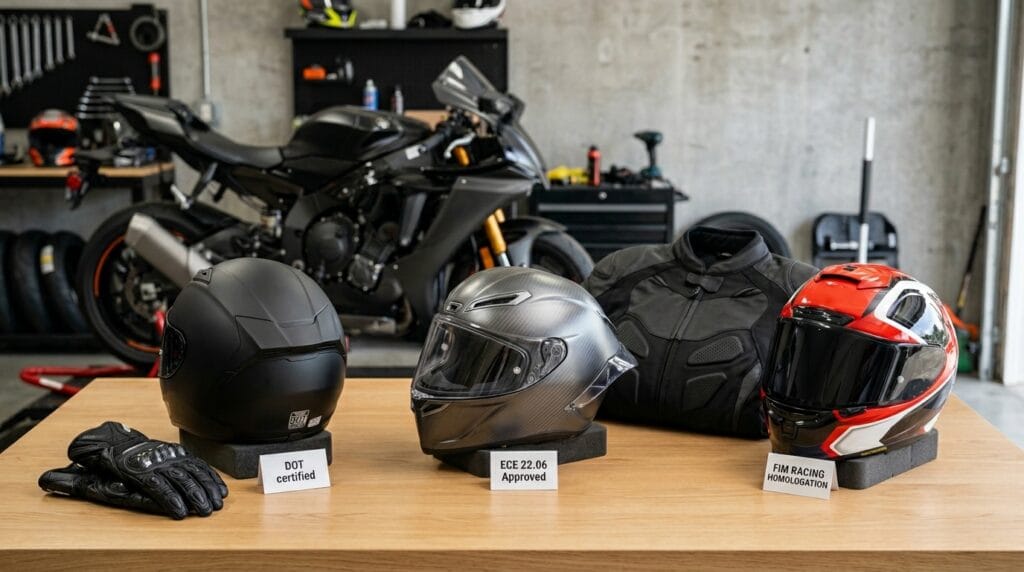
Motorcycle helmet standards 2026 are becoming a bigger topic because riders now see more labels, more technology, and more marketing claims than ever before. A helmet may say DOT, ECE 22.06, Snell, FIM, carbon fiber, track ready, adventure approved, or race tested. That sounds impressive, but it can also confuse buyers.
The simple truth is this: a helmet is not only a style choice. It is the most important piece of riding safety gear most motorcyclists will ever buy. A good helmet can help protect the skull, brain, face, jaw, and eyes during a crash. A poor helmet may look aggressive on social media but fail when it matters.
In 2026, riders should pay attention to three things before buying. First, the helmet must meet the legal safety requirement in the rider’s market. Second, it should fit the rider’s head properly. Third, it should match the type of riding the rider actually does.
A track rider, daily commuter, adventure rider, scooter rider, and cruiser rider may all need different features. Still, every rider needs real protection, not just a cool shell design.
What Motorcycle Helmet Standards 2026 Actually Mean
Helmet standards exist because not every helmet protects the same way. A real motorcycle helmet goes through impact, retention, penetration, labeling, and coverage requirements. These tests help separate protective helmets from novelty helmets that only look the part.
In the United States, NHTSA tells riders to look for the DOT symbol on the outside back of the helmet. That label means the helmet meets Federal Motor Vehicle Safety Standard No. 218. Riders can review NHTSA’s official helmet guidance here: NHTSA motorcycle helmet safety guide.
In Europe and many international markets, riders often see ECE helmet approval. The current modern standard is commonly known as ECE 22.06. It is connected to United Nations Regulation No. 22 for protective helmets, visors, and accessories. Riders can review the official UN treaty reference here: United Nations Regulation No. 22.
Racing adds another layer. FIM homologation matters most for riders who compete under FIM rules. The FIM Racing Homologation Programme focuses on advanced safety evaluation for racing products. You can review the programme here: FIM Racing Homologation Programme.
DOT helmets are the baseline for U.S. riders
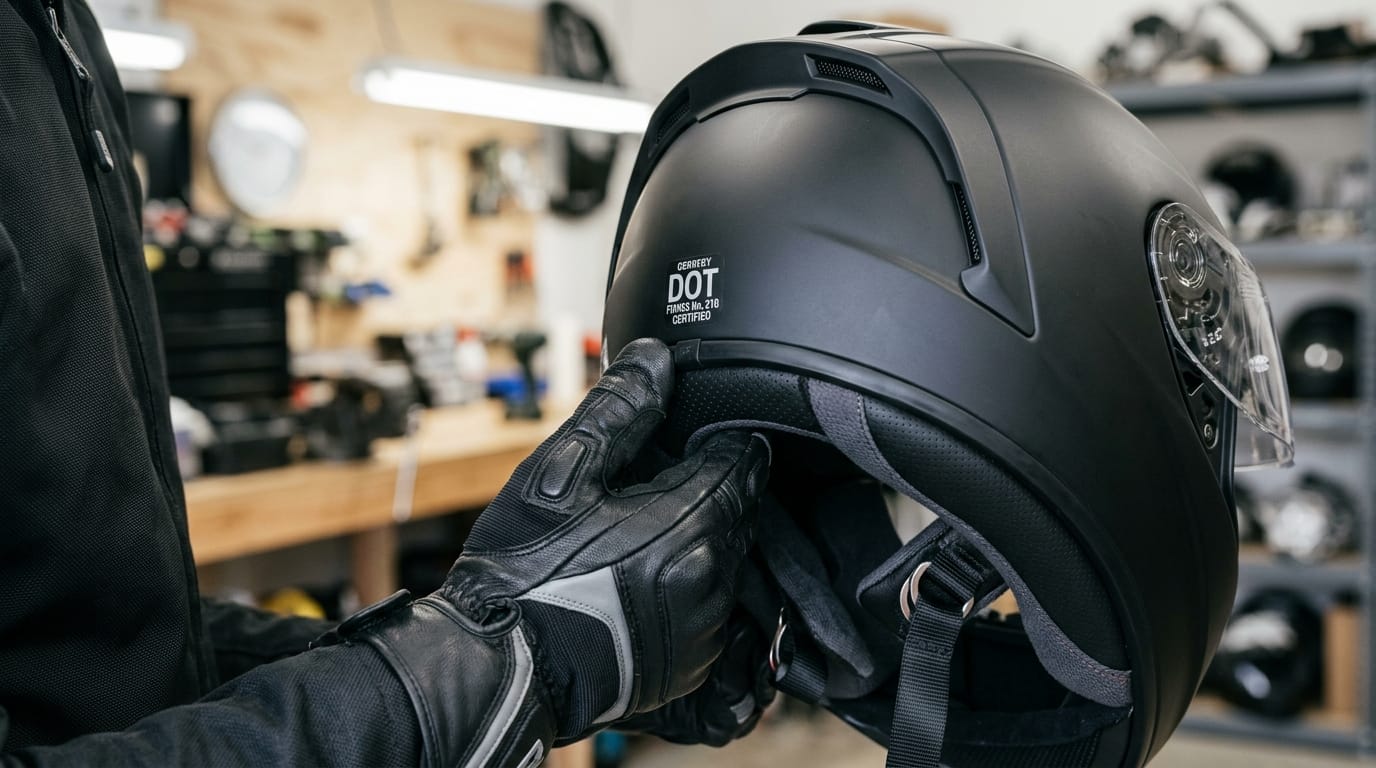
DOT approval is the key legal reference for riders in the United States. A DOT helmet should carry the DOT symbol on the outside back. That symbol matters because it shows the helmet claims compliance with FMVSS No. 218.
Riders should avoid novelty helmets. These may be thin, light, cheap, and stylish, but they do not offer the same protection as a real motorcycle helmet. Some novelty helmets even use fake-looking labels. That creates a dangerous false sense of security.
Before buying, inspect the helmet carefully. Look for the DOT label. Check the chin strap. Feel the liner. A real helmet should have a solid shell, protective inner foam, and secure retention system. If it feels like a costume prop, walk away.
DOT does not mean every helmet fits every rider
A DOT label does not solve every problem. A helmet can meet a safety standard and still be wrong for your head. Poor fit can reduce comfort and protection. It can also cause pressure points, headaches, wind noise, and movement at speed.
A helmet should feel snug without causing sharp pain. It should not rotate freely on your head. The cheek pads should hold your face securely. The chin strap should fasten firmly. When you shake your head, the helmet should move with you, not around you.
Riders should try helmets from different brands when possible. Head shape matters. Some helmets fit rounder heads. Others fit intermediate oval or long oval shapes. The safest helmet is not only the one with the best label. It is the one that fits correctly and stays secure.
ECE 22.06 is getting more attention worldwide
ECE 22.06 has become one of the most discussed helmet standards because many riders see it on premium full-face, modular, adventure, and sport helmets. It replaced the older ECE 22.05 standard in many markets and reflects newer testing expectations.
For riders, the practical takeaway is simple. If you are shopping internationally, ECE 22.06 is a strong sign that the helmet was built for modern testing requirements. It does not replace DOT rules for U.S. road legality, but it can still be useful information when comparing models.
Many riders now prefer helmets that carry more than one recognized certification. A helmet with DOT and ECE 22.06 can appeal to riders who want broad safety credibility. Still, fit, comfort, ventilation, visor quality, and retention design remain important.
FIM helmets are mainly for serious track and racing use
FIM homologation is not something every commuter needs. It is mainly important for racers and serious track riders. FIM-approved helmets must meet specific race-focused testing demands. That makes them relevant in high-speed competition.
In 2026, FIM helmet standards are getting more attention because FRHPhe-02 becomes part of the racing conversation. FIM announced additional homologated helmets under FRHPhe-02 and noted that these helmets also carry ECE 22.06 certification before passing FIM helmet standard testing.
For everyday riders, this does not mean you must buy an FIM helmet. It means race helmet technology is moving forward. Some premium street helmets may benefit from lessons learned through racing, but the best helmet still depends on your real use.
A race helmet is not always the best street helmet
A racing helmet can offer serious protection, but it may not be the perfect daily helmet. Track helmets often focus on high-speed stability, aggressive aerodynamics, and tucked riding posture. They may feel noisy or less practical during city riding.
A commuter may need better low-speed ventilation, a wider field of view, sun visor convenience, Bluetooth speaker space, or easy visor changes. An adventure rider may want a peak, large eye port, and goggle compatibility. A touring rider may care more about quietness and comfort over long hours.
Do not buy a helmet only because a racer wears something similar. Buy based on your riding position, motorcycle type, climate, mileage, and safety needs.
How Riders Should Choose a Helmet in 2026
The best helmet choice starts with riding style. A full-face helmet offers strong all-around protection for many riders. A modular helmet can help commuters and touring riders who want convenience. An adventure helmet works well for mixed road and light off-road riding. An open-face helmet may feel comfortable, but it offers less facial protection.
Riders should also think about visibility. A clear, distortion-free visor matters. Anti-fog inserts, good sealing, and smooth visor mechanisms can make a helmet safer in real conditions. If you ride at night, avoid relying only on dark visors.
Ventilation also matters. A hot, foggy, uncomfortable helmet can distract the rider. Comfort is not just luxury. Comfort helps concentration. A helmet that fits well and manages heat well is easier to wear every ride.
Your site already has strong related safety content. Readers can explore the Moto News Blog Riding Safety section for more safety-focused articles. They can also review your Motorcycle Technology section for wider rider-assist and safety trends.
The best helmet is the one you will actually wear
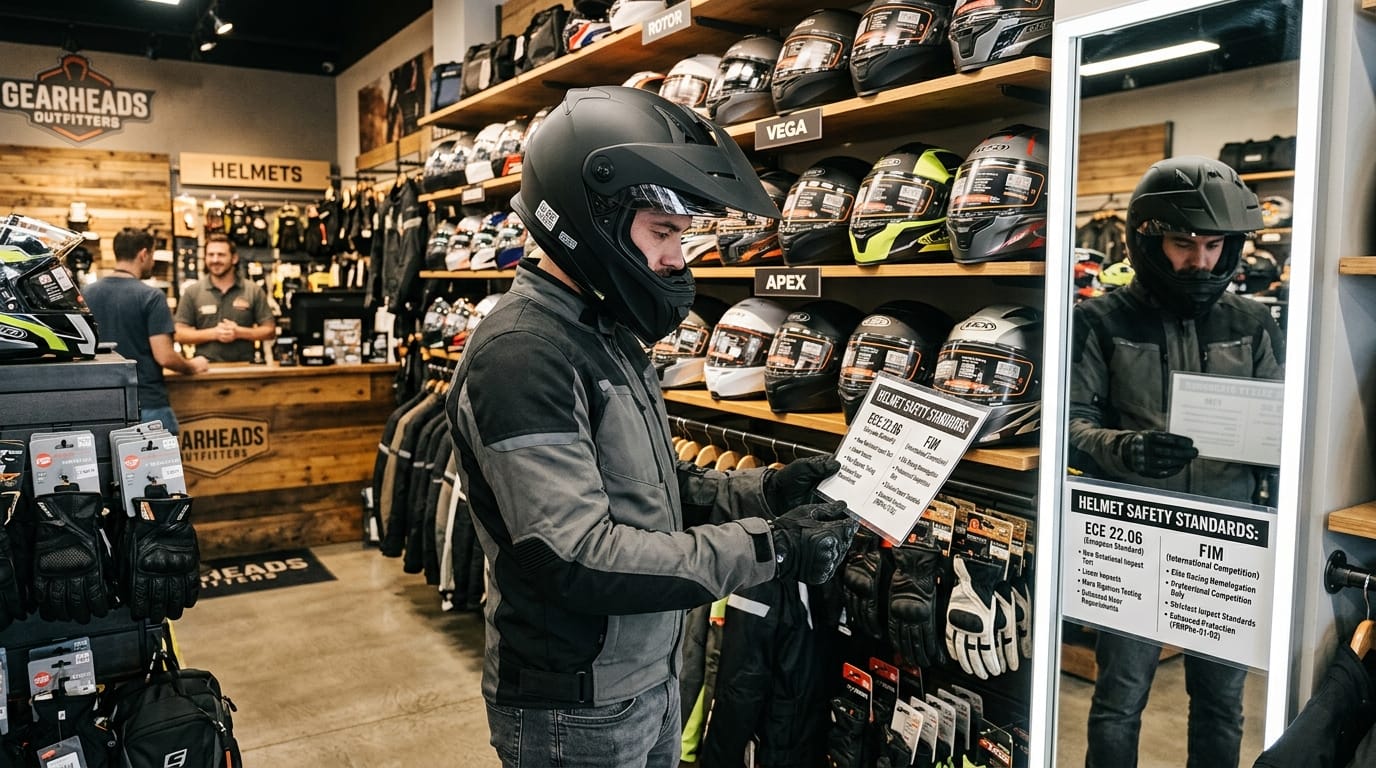
Many riders buy helmets based on graphics, price, brand image, or what looks good with the bike. Style is fine, but it should come after safety and fit. A beautiful helmet that sits on the shelf protects nobody.
Weight matters. Noise matters. Ventilation matters. Visor quality matters. Liner comfort matters. If a helmet annoys you after 15 minutes, you may stop wearing it for short rides. That is a bad habit.
The strongest buying strategy is simple. Choose a recognized safety certification first. Choose the correct size and head shape next. Then compare comfort, features, and style. That order keeps priorities clear.
Riders interested in broader safety upgrades should also read your article on motorcycle safety technology in 2026. Helmets, airbags, radar rider aids, better lights, and smarter gear are all part of the same safety conversation.
Replace a helmet after a crash or major impact
A helmet may look fine after a crash, but the inner liner can still be damaged. That liner absorbs energy. Once it compresses, it may not protect the same way again.
Replace a helmet after a crash, a hard drop, or any major impact. Also replace old helmets when the liner, strap, shell, or visor system starts to degrade. Sweat, UV exposure, heat, and age can all affect materials over time.
Do not buy used helmets unless you know the full history. A used helmet may have crash damage you cannot see. Saving money is not worth risking your head.
Motorcycle helmet standards 2026 should help riders make smarter choices, not confuse them. DOT matters for U.S. legality. ECE 22.06 matters for international modern safety testing. FIM matters for serious racing. Each label has a role.
The final buying rule is direct: choose a certified helmet that fits your head, suits your riding, and feels comfortable enough to wear every time. Expensive does not always mean best. Cheap and uncertified is not worth the risk. Your helmet is not just gear. It is your last line of defense when everything else goes wrong.